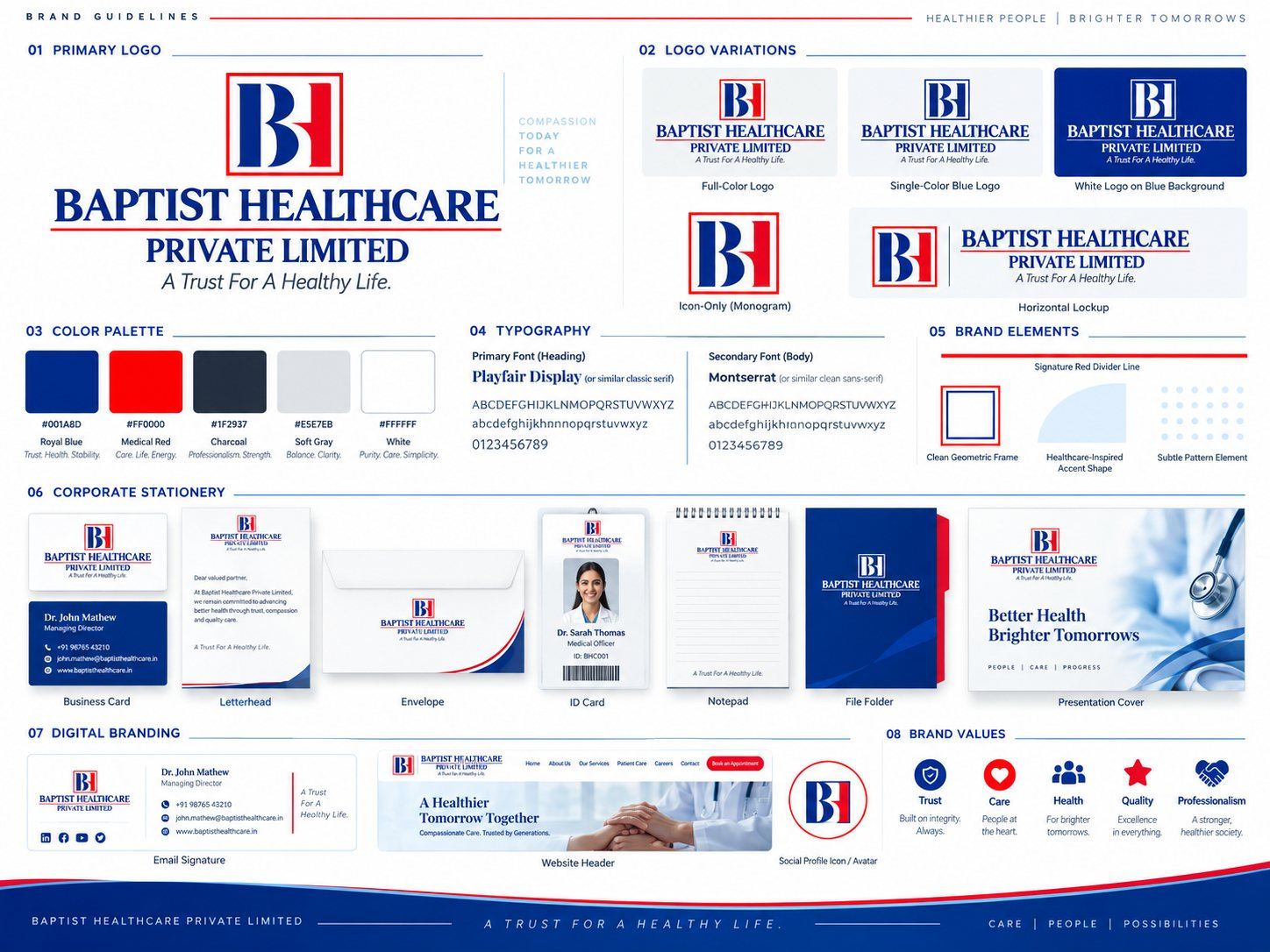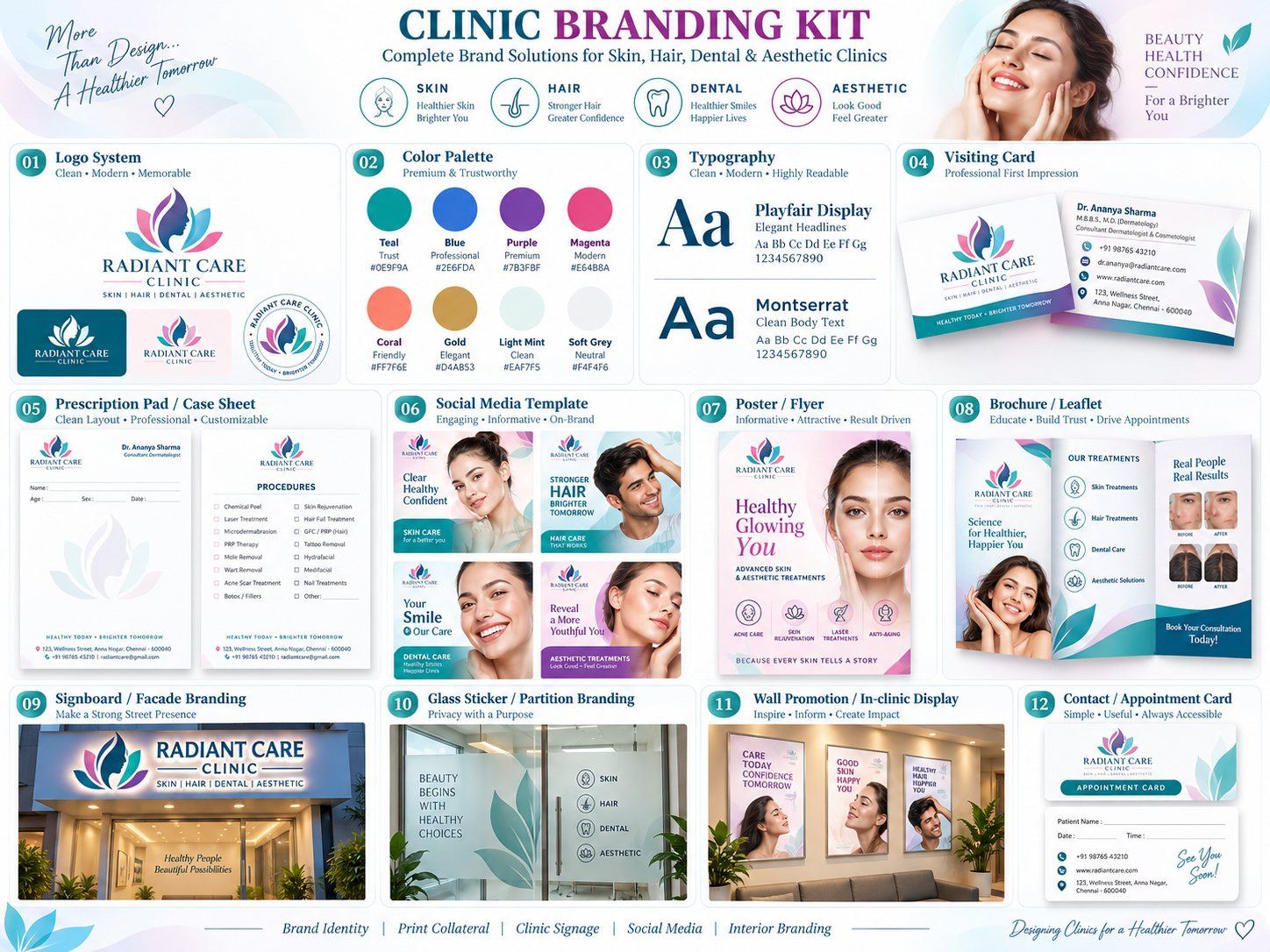
Social Media Post Design for Clinics: 20 Templates and the Rules Behind Them
Most clinic feeds look busy and say little: a different font every week, a stock photo of a smiling model, a phone number too small to read. Good social media post design for clinics is less about clever graphics and more about a repeatable system. Here are the 20 post templates we use as a starting point, the sizes that fit Instagram, Facebook and WhatsApp, and what the National Medical Commission’s new advertising guidelines of 6 October 2026 mean for every clinic post in India.
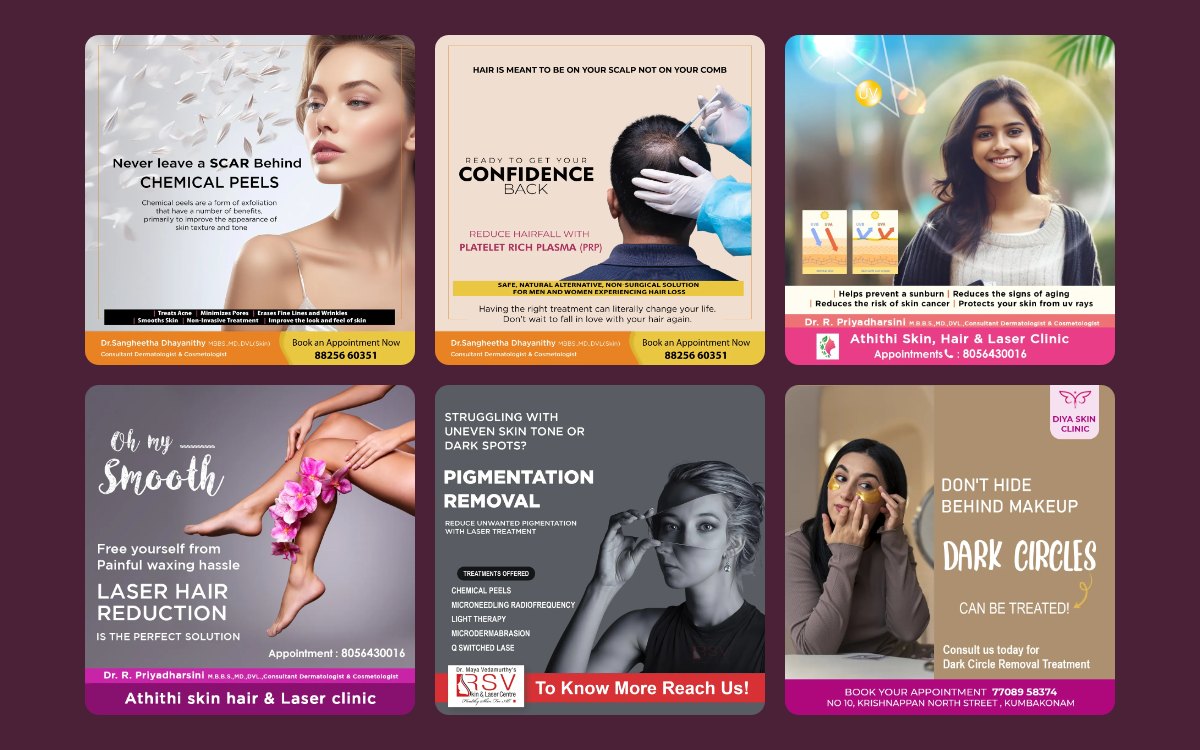
The short answer: design clinic posts as a set of fixed templates, not one-off graphics. Use one headline per post that can be read on a phone in two seconds, your brand colours and fonts every time, a real photo where you can, and the same footer band with the clinic name, doctor and phone or WhatsApp number. Post three or four times a week on Instagram and Facebook and share the best ones to WhatsApp Status. Rotate through education, trust, service, seasonal and engagement posts so the feed is useful, not just promotional. Keep everything factual: since the NMC’s guidelines of 6 October 2026, doctors’ posts should show the doctor’s name, qualifications and registration number, and must not use “best doctor” or “guaranteed” claims, patient testimonials or promotional before-and-after photos.
Why clinics need templates, not one-off posts
A clinic is not a fashion brand. Patients do not follow it for entertainment; they follow it because they are thinking about a treatment, or they already trust the doctor. What they need from the feed is recognition and reassurance: this is the same clinic, it knows what it is talking about, and booking is easy.
Templates make that possible. Once the layout, colours, fonts and footer are fixed, a receptionist or a junior designer can produce a new post in minutes, and every post still looks like it came from the same place. That consistency is what turns scattered posts into a brand. It is also why our clinic branding work includes a social media kit alongside the logo and stationery.
The 20 clinic post templates
We group the templates into five families. A healthy clinic feed rotates through all five, so no single week is only offers or only greetings.
Education: answer the questions patients already ask
- Myth vs fact. One common myth on the left, the fact on the right. Works well as a two-slide carousel.
- “3 signs you may need…” Three short symptoms with icons, ending with “Talk to our dermatologist.”
- Treatment explainer. What the treatment is, who it suits, how many sessions it usually takes and the typical downtime, in four lines.
- Aftercare checklist. A tick-list patients can save and follow after a peel, laser session or procedure.
Trust: show the people and the place
- Meet the doctor. A real photo, name, recognised qualifications, specialty and registration number. State the facts and leave out superlatives (more on why below).
- Meet the team. Nurses, therapists and front desk staff, one per post, with a line about their role.
- Behind the scenes. Sterilisation, room preparation or how a consultation runs. Patients worry about hygiene more than they say.
- Facility and equipment. The treatment room or a device, photographed properly, with one line on what it is used for.
Service and booking: make it easy to say yes
- Treatment information poster. The workhorse: treatment name as the headline, one factual line on what it is for, a strong photo, and the footer with doctor, clinic and number. No promises about results.
- New service announcement. A plain, factual notice that a new service or department is now available, with the timings.
- Timings and holiday notice. OP hours, Sunday timings, festival closures. Plain, but among the most useful posts a clinic makes.
- How to book. Three numbered steps: call or WhatsApp, choose a time, what to bring. Pin it to the top of the profile.
Awareness and seasonal: be useful at the right time
- Awareness post. Sun protection, acne myths, hair fall in the monsoon: a single educational message with a simple visual. Keep the sell out of it.
- Seasonal care tip. Summer heat, monsoon humidity or wedding season, tied to what your clinic treats.
- Festival greeting. Pongal, Diwali, Christmas, Ramzan, Independence Day. Keep the branding light and the message warm, with no offer or promotion attached.
- Health tip carousel. Five slides, one tip each, ending with the clinic footer. Carousels are easy for patients to save and come back to.
Engagement: start a conversation
- FAQ answered. “Is laser hair reduction permanent?” One question, a short honest answer.
- This or that. “Sunscreen gel or cream?” Two options and a prompt to comment.
- Question of the week. Invite questions in the comments or DMs and answer the best one in next week’s post.
- Your first visit. What happens when a new patient walks in: registration, consultation, the plan. It removes the fear of the unknown.

Design rules that make clinic posts work
The templates only work if every post follows the same few rules. These are the ones we hold to when designing social media creatives for clinics in our studio:
- One message per post. If the post needs two headlines, it is two posts.
- Readable on a phone. The headline should be legible in the feed without opening the post. As a rule of thumb, keep the text on the image under about 20 words and put the detail in the caption.
- Same footer, every time. A band at the bottom with the clinic name, the doctor’s name, qualifications and registration number, and the phone or WhatsApp number. Patients screenshot posts, so these details belong on the image, not only in the caption. Since October 2026 the registration details are expected, not optional.
- Brand colours and fonts only. Two colours, two fonts, taken from your brand kit. This is the single biggest difference between a professional feed and an amateur one.
- Real photos over stock, and label AI. Your doctor, your rooms, your team. Where you use stock imagery, choose models that look like your patients and never present them as patients. If an image is AI-generated, the NMC guidelines expect it to be marked as AI-generated, and AI must never be used to create patient photos or results.
- Logo small and consistent. Same corner, same size. A clinic logo that works at small sizes helps here; see our doctor logo design principles.
- English and Tamil where it helps. For clinics in Chennai and Tamil Nadu, a Tamil headline on awareness and timing posts can reach patients that English alone does not.
Sizes for Instagram, Facebook and WhatsApp
Design once at the right size and reuse it across platforms:
| Format | Size (pixels) | Use it for |
|---|---|---|
| Portrait feed post (4:5) | 1080 × 1350 | Most Instagram and Facebook posts; takes the most space in the feed |
| Square feed post (1:1) | 1080 × 1080 | Simple posters, greetings, centred designs |
| Profile grid preview (3:4) | 1080 × 1440 | Instagram now shows profile grid thumbnails at 3:4, so keep key text inside the middle of a 4:5 or square design |
| Story, Reel cover, WhatsApp Status (9:16) | 1080 × 1920 | Timings, notices and reminders; keep text away from the top and bottom edges, where the app’s buttons sit |
Platforms change their layouts from time to time, so check the current guidance before a big campaign. The safe habit is to keep headlines and phone numbers well inside the edges of every design.
What changed on 6 October 2026: NMC rules for clinic posts
On 6 October 2026 the National Medical Commission issued Guidelines on Ethical Advertising and Public Communication for registered medical practitioners and hospitals, with immediate effect. They work alongside the Indian Medical Council (Professional Conduct, Etiquette and Ethics) Regulations, 2002, and they treat promotional social media posts, sponsored content and influencer content as advertising. This is not legal advice, but these are the points that change how we design clinic posts:
- Show who the doctor is. A doctor’s posts should disclose the doctor’s name, qualifications, registration status and State or National Medical Register number. We now build this into the footer band of every template.
- No superlatives or guarantees. Claims such as “best doctor”, “guaranteed cure” and “100% success” are prohibited, as are claims that cannot be verified. The Drugs and Magic Remedies (Objectionable Advertisements) Act, 1954, separately prohibits advertisements claiming to cure the conditions in its schedule.
- No testimonials or promotional before-and-after photos. Doctors should not request or share patient testimonials, reviews or endorsements to promote their practice, and before-and-after photos may not be used as promotion. Patient consent does not make them acceptable. Anonymised cases with consent remain possible for genuine scientific or educational purposes.
- Careful with offers. Discounts, limited-period offers, contests and free procedures that could encourage unnecessary consultations or treatment are restricted. Transparent, factual fees are fine.
- No product endorsements. Doctors should not lend their name or photo to promote drugs, devices or commercial products. A skincare brand post with the doctor’s face on it is now a clear risk.
- Label AI content. AI-generated content that is permitted should carry a mark saying it is AI-generated, and AI must not be used to fabricate patient images, testimonials or outcomes.
What remains clearly allowed is the heart of a good clinic feed: health awareness and education that does not solicit patients, greetings on national and professional occasions, factual announcements such as a new address or timings, and factual information about the clinic’s services, facilities and charges. That is why the 20 templates above lean on education, information and trust rather than offers and results. Patient messages and photos that arrive in DMs are still personal data, too; see our DPDPA checklist for clinics.

How often should a clinic post?
Three or four feed posts a week on Instagram and Facebook is a realistic rhythm for most clinics, with stories in between and the strongest posts shared to WhatsApp Status. Consistency matters more than volume: a clinic that posts three good, on-brand posts every week for six months will look more trustworthy than one that posts daily for a month and then goes quiet. Plan a month at a time, rotating the five template families, and keep festival and holiday posts on a calendar so they are ready on the day.
Our Digi Design studio designs social media creatives, posters and campaigns for dermatology, aesthetic and healthcare clinics, from a one-time template set to monthly posts. You can see campaigns, posters and social posts we have made for clinics in the selected work on our homepage, and the social media kit that comes with our branding packages. If you need graphic design services that stay consistent month after month, start there.
WhatsApp us with your clinic name and the treatments you want to promote, and we’ll reply with a plan and quote within one working day.
Frequently asked questions
How often should a clinic post on social media?
Three or four feed posts a week on Instagram and Facebook is a realistic rhythm for most clinics, with stories in between and the strongest posts shared to WhatsApp Status. Consistency matters more than volume, so plan a month at a time and rotate education, trust, service, seasonal and engagement posts.
What size should clinic social media posts be?
Use 1080 x 1350 pixels (4:5) for most Instagram and Facebook feed posts, 1080 x 1080 for square posters and greetings, and 1080 x 1920 (9:16) for stories, reel covers and WhatsApp Status. Instagram shows profile grid thumbnails at 3:4, so keep headlines and phone numbers well inside the edges.
What should a clinic social media post include?
One clear headline, a real photo or simple visual, the clinic's brand colours and fonts, and a footer band with the clinic name, the doctor's name, qualifications and registration number, and the phone or WhatsApp number. Under the NMC's October 2026 guidelines, doctors' posts should disclose the doctor's name, qualifications and registration details.
Can clinics post before-and-after photos on Instagram?
Not as promotion. The National Medical Commission's Guidelines on Ethical Advertising and Public Communication, issued on 6 October 2026, prohibit before-and-after photographs as promotional material, and patient consent does not change that. Anonymised cases with consent remain possible for genuine scientific or educational purposes.
Can doctors share patient reviews or testimonials on social media?
The NMC's October 2026 guidelines say doctors should not request or share patient testimonials, recommendations, endorsements or reviews to promote their practice on social media. Clinic feeds should rely on education, factual information about services and the doctor's qualifications instead.
Should a clinic use templates or custom designs for social media?
Use custom-designed templates. A designer builds a set of on-brand templates once, with fixed layouts, colours, fonts and a compliant footer, and the clinic or its agency fills them in each week. That gives a consistent, professional feed without designing every post from scratch.