
Beyond WhatsApp: When Clinics Need Real Booking Systems
WhatsApp booking works until it doesn't. The five signs a clinic has outgrown it, what a real booking system must actually do, why most SaaS tools fail Indian clinics somewhere around Day 45 — and the WhatsApp-first hybrid that keeps patients happy while the front desk finally sees one calendar.
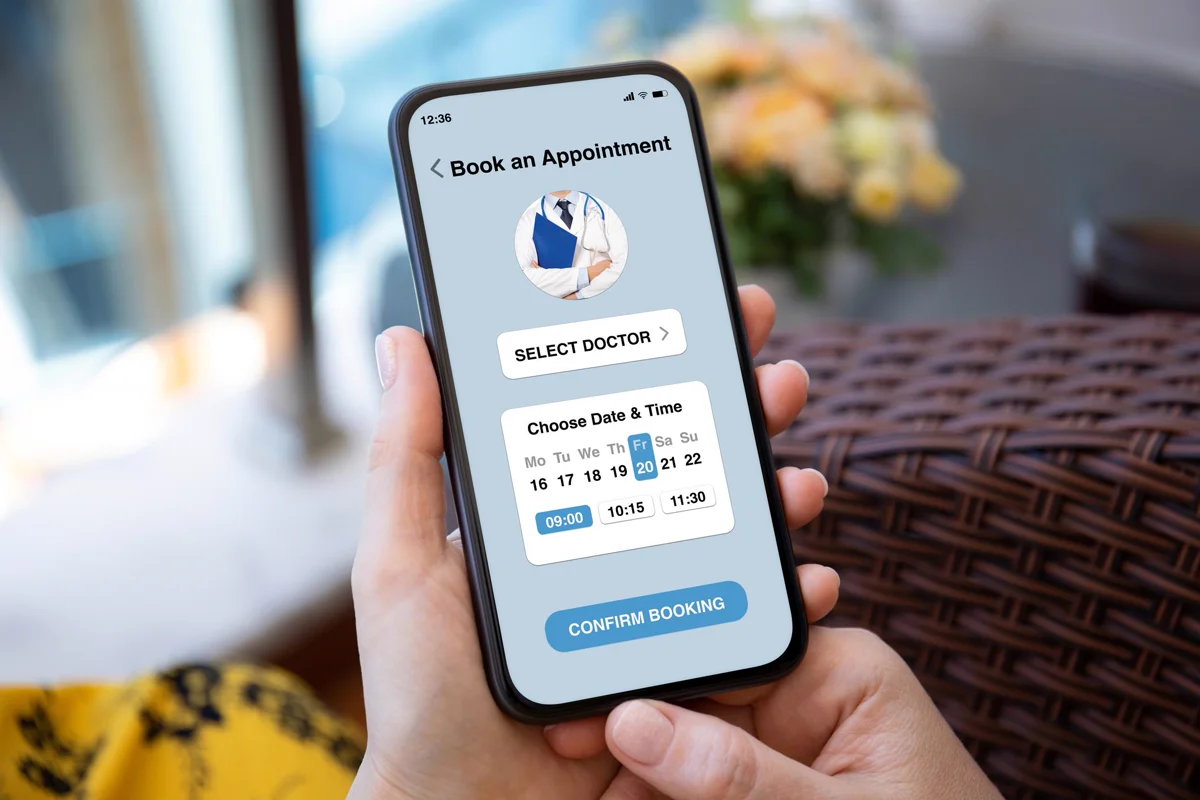
Most clinics in Chennai book the same way: a patient messages the clinic's WhatsApp number, the receptionist replies with available times, the patient picks one, and it goes into a diary, a Google Calendar, or the receptionist's memory.
For a new clinic this is not a problem to fix. It is the right system.
Patients are already on WhatsApp. There is nothing to download, no form to fill, no password to forget. The conversation feels personal, the receptionist can answer "is the doctor available Saturday?" in ten seconds, and a photo of a skin concern can be sent before the visit. We build WhatsApp-first clinic websites for exactly this reason: at 5 to 20 bookings a week, nothing beats it.
The question is not whether WhatsApp is good enough. It is when it stops being enough — and what you should do about it, because the obvious answer (buy booking software) fails more often than it works.
Five signs you have outgrown WhatsApp booking
These are the patterns we see when a clinic calls us about "a booking system". If two or more are true for more than a month, keep reading. If none are, close this tab and keep your WhatsApp.
- A double booking that came from a chat thread. Two patients, one slot, and the only record was a WhatsApp message the receptionist scrolled past. Once this has happened, it will happen again.
- Two or more practitioners sharing rooms or machines. A single doctor's diary is easy. Two doctors, one laser room and a therapist who needs 45-minute blocks is a scheduling problem, not a messaging problem.
- No-shows above one in five. Without automatic reminders, aesthetic clinics in our experience run 20 to 30 percent no-shows on treatments booked more than three days ahead. Each one is an empty room you paid for.
- The receptionist is the system. If she is on leave, bookings stop or go wrong. Nobody else can see what is booked, and after 6:30 pm the messages pile up until morning.
- You cannot answer a simple question. How many consultations last month? Which treatment gets booked most? What fraction of website enquiries became visits? If the answer lives in chat history, you do not have the number.
Notice what is not on the list: "patients want online booking". They mostly do not. Indian patients want to message a human. The pressure to change comes from inside the clinic, not from patients.
What a "real booking system" actually means
The phrase gets used loosely. A contact form that emails the clinic is not a booking system. A calendar link is not a booking system. A real one does five things, and the first two are what separate it from WhatsApp:
- Slot logic. It knows which practitioner, which room and which machine a treatment needs, how long it takes, and what buffer follows it. It refuses a booking that conflicts. This is the whole point.
- One calendar that is always true. Every booking — online, WhatsApp, phone, walk-in — lands in the same place. If any channel bypasses it, the calendar is a guess.
- Confirmations and reminders sent without anyone typing them, on the channel patients actually read — which in India is WhatsApp, not email.
- Deposits or advance payment for high-value or long slots, because a ₹500 deposit cuts no-shows harder than any reminder.
- A patient record light enough to use. Name, phone, visit history, notes, consent status. Not a hospital EMR — a memory the clinic shares.
Reporting, staff logins and a patient-facing "my appointments" page follow from those five. Everything else on a vendor's feature list is decoration.
The three routes, and who each one fits
Route 1 — Keep WhatsApp, add structure behind it
The cheapest fix and the right one for most single-doctor clinics. WhatsApp stays the only patient-facing channel. Behind it, the front desk moves from a diary to a proper shared calendar with treatment-length blocks, and every booking is entered the moment it is confirmed. Add a saved-reply set and a reminder routine the evening before.
Fits: one or two practitioners, under 30 bookings a week. Cost: close to zero. Fails when: the discipline slips — which is why it is a stepping stone, not a destination.
Route 2 — Off-the-shelf clinic or salon SaaS
Subscription tools built for clinics, salons and spas. Slot logic, reminders, reports and a booking widget out of the box, typically ₹1,500 to ₹8,000 a month for one location, more if priced per practitioner. Set-up takes a week.
Fits: multi-practitioner clinics that will commit one person to owning the tool. Fails when: see the next section — this is the route that produces most of the Day-45 phone calls we get.
Route 3 — A booking engine built into your own website
Custom slot logic, WhatsApp confirmations through the Business API, deposits through an Indian payment gateway, and a patient record the clinic owns. Priced once (₹1.5 lakh to ₹4 lakh in our Custom tier) rather than monthly, and shaped around how the clinic actually works instead of the other way round.
Fits: clinics doing 50+ bookings a week, multi-location groups, or anyone whose treatment logic a generic tool cannot model. Fails when: bought too early. A solo practitioner does not need this.
Why most SaaS bookings fail Indian clinics on Day 45
Roughly six weeks. That is how long, in our experience, a clinic uses a subscription booking tool before it quietly goes back to WhatsApp and a diary. The software is rarely the problem. These five things are:
- Patients never moved. The clinic put a "Book online" button on the site; patients kept messaging WhatsApp. So the front desk is now entering WhatsApp bookings into the tool by hand, which is more work than before, and within a month some are not entered at all. The calendar stops being true, and a calendar that is only mostly true is worse than a diary.
- Reminders that do not arrive. Most tools default to SMS. In India, transactional SMS needs DLT registration of the sender and every template, and even then delivery is uneven. Reminders sent to email go unread. The one channel patients read — WhatsApp — is either not supported or costs extra per message.
- Pricing in dollars, per practitioner. A plan that looked like ₹2,000 becomes ₹9,000 when the second doctor and the therapist are added, billed in USD on a card the clinic owner did not want to leave on file.
- Walk-ins and phone calls are invisible. A patient who calls, or walks in from the street, is booked on paper because the tool takes 40 seconds and the phone is ringing. Now there are two systems of record and no rule about which one wins.
- Nobody owns it after the trial. The person who set it up was enthusiastic for two weeks. There is no daily routine, no report anyone reads, and no one whose job it is to keep the calendar honest.
Every one of these is a workflow failure, not a software failure. Which means buying a different tool does not fix it.
The hybrid that actually works
Whatever route you take, the design rule is the same: WhatsApp stays the front door; the booking system is the back office. Do not try to move patients. Move the record.
In practice it looks like this:
- Every WhatsApp button on the website carries a pre-filled message that names the treatment and the page it came from, so the front desk knows what the patient wants before replying — and the clinic knows which page produced the enquiry.
- The receptionist replies with a slot link, or simply agrees a time in chat, then enters it in the calendar before sending the confirmation. Confirmation goes out on WhatsApp, from the system, with the date, practitioner and a reschedule link.
- A reminder lands on WhatsApp the evening before. For treatments over a set value, a deposit link goes with the confirmation.
- Phone bookings and walk-ins are entered by whoever takes them, into the same calendar, at the counter. No paper.
- One rule everyone knows: if it is not in the calendar, it is not booked.
Patients experience nothing new. They message, they get a reply, they get a reminder. The clinic experiences everything new: one calendar, fewer no-shows, and numbers at the end of the month.
What to look for — the checklist
| Capability | Why it matters | Must-have? |
|---|---|---|
| Practitioner + room + machine slot logic | Prevents the double bookings that started this conversation | Yes |
| WhatsApp confirmations and reminders | The only channel Indian patients reliably read | Yes |
| Manual entry in under 15 seconds | Phone and walk-in bookings must be captured or the calendar lies | Yes |
| Deposits via UPI / Indian gateway | Cuts no-shows on long or high-value slots | For treatments over ₹3,000 |
| Rupee pricing, per location | Per-practitioner USD plans triple in cost by month three | Yes |
| Export of your own data | You will change tools one day; the patient list must come with you | Yes |
| Consent and retention settings | Booking records are personal data under DPDPA | Yes |
| Patient-facing "my appointments" page | Nice for reschedules; rarely used in practice | No |
| Full EMR / clinical notes | Different product, different price; do not buy a hospital system for a clinic | No |
The compliance part nobody mentions in the demo
A booking record is personal data: name, phone, the treatment sought and, often, a health note or photo sent before the visit. Under India's DPDPA the clinic is the data fiduciary whether the software vendor is in Chennai or California. That means a stated purpose, consent collected at the point of booking, a retention period, and a working way to delete a record on request.
Ask any vendor three questions before signing: where is the data stored, how is a deletion request handled, and what happens to the patient list if the subscription ends. If the answers are vague, the tool is a liability with a calendar attached. Our DPDPA checklist for clinic websites covers the wording for the consent line itself.
Where Baptist Digitek lands
Honestly: for most clinics that call us, the answer is Route 1. Keep WhatsApp, fix the calendar discipline, add reminders. We say so, and we do not charge for saying so.
For clinics that have genuinely crossed the line — multiple practitioners, real no-show cost, a receptionist who cannot take a day off — we build the hybrid above into the clinic's own website. Slot logic shaped around the actual treatment menu, WhatsApp Business API for confirmations and reminders, UPI deposits, and a patient record the clinic owns and can export. It is our Custom tier, quoted per project, and it is only worth it at the scale described in this article.
What we will not do is bolt a generic booking widget onto a website and call it a system. We have seen how Day 45 goes.
The clinic that books well is not the one with the most software. It is the one with a single calendar that is always true, and a rule everyone follows to keep it that way.
If you are not sure which side of the line your clinic is on, send us your weekly booking count and the number of practitioners. That is enough to give you a straight answer.
WhatsApp us — we would rather tell you to keep your WhatsApp than sell you a system you will abandon in six weeks.
Frequently asked questions
When should a clinic move from WhatsApp booking to a booking system?
When any of these is true for more than a month: 20 or more appointments a week, two or more practitioners sharing rooms or slots, a double booking or missed appointment traced to a chat thread, no-shows above roughly one in five, or after-hours messages going unanswered until morning. Below that scale, WhatsApp with a shared calendar is usually enough and a booking system adds cost without adding bookings.
Does a booking system replace WhatsApp for patients?
No, and it should not try to. Indian patients will keep messaging on WhatsApp whatever tool the clinic buys. The system that works keeps WhatsApp as the front door and puts the booking engine behind it: the patient picks a slot from a link, the confirmation and reminder arrive on WhatsApp, and the front desk sees one calendar instead of a chat thread.
Why do SaaS booking tools fail Indian clinics after a few weeks?
Usually five reasons: the front desk stops entering bookings because patients still message on WhatsApp, so the calendar stops being true; reminders rely on SMS templates that need DLT registration and arrive late or not at all; pricing is per practitioner in US dollars; walk-ins and phone bookings are not captured; and nobody owns the tool after the trial ends. The failure is rarely the software. It is two systems of record with no rule about which one wins.
How much does a clinic booking system cost in India?
Off-the-shelf SaaS runs roughly ₹1,500 to ₹8,000 a month for a single-location clinic, more if priced per practitioner. A custom booking engine built into the clinic website is a one-time ₹1.5 lakh to ₹4 lakh depending on practitioner logic, deposits and record-keeping, plus managed support. The website itself is priced separately — see our clinic website cost guide.
Do booking systems need DPDPA compliance?
Yes. A booking record holds a name, phone number, the treatment sought and often a health note, which is personal data under India's DPDPA. The clinic needs a stated purpose, consent at the point of booking, a retention period and a way to delete on request. Ask any vendor where the data is stored and how a deletion request is handled before signing — our DPDPA checklist has the consent wording.